Appeal that draws attention
The impression that makes someone want to meet or talk to you. Presentation and self-expression can be part of this.
Do you think you’re attractive or popular? Check your "attractiveness level" from various perspectives—appearance, personality, actions, and more—to see how appealing you might be to others!
Reflect on how you express yourself and connect with others through 15 questions. Your answers lead to one of 11 attractiveness levels, with an analysis describing that result.
Choose the answers closest to your everyday self.
Get one of 11 results from 0 to 100.
Read the analysis of your interaction style.
No photos or facial ratings are involved. This is an entertainment quiz based on your answers, not a measure of how many people like you or your chances of romantic success.
In a romantic context, being attractive means drawing another person’s interest or affection. The word can refer to more than appearance: the way you speak, interact and express your personality can be part of it, too.
The impression that makes someone want to meet or talk to you. Presentation and self-expression can be part of this.
Feeling heard and respected by someone. These qualities become visible as you spend time together.
Receiving attention from many people and being compatible with a particular person are different things. Your score cannot tell you how your crush feels.
The topics in the questions are grouped here for clarity. The test does not provide a separate score for each of these four areas.
Recognizing your strengths and sharing your feelings or interests. The focus includes expressing yourself naturally, not just feeling confident.
Understanding others, showing respect and responding when feelings clash. These questions invite you to reflect on everyday interactions.
Your approach to meeting people and spending time together. Connecting does not always mean being the center of attention.
Caring about how you present yourself and continuing to learn. These questions do not rate your facial features.
There are 11 results, from 100 to 0 in steps of 10. Compare the level names and summaries to explore the tendencies each one describes. Each result has its own page with the full analysis.
These are the quiz’s result names. The numbers do not assess your appearance or your worth as a person.
Confidence, social ease and self-expression combine in a result describing a strong presence that draws people in.
Read the full resultDistinctive personality and charisma stand out, with a tendency to attract attention in many settings.
Read the full resultConfident behavior and social skills come together in an open, engaging presence.
Read the full resultIndividuality and talents come through clearly, with energetic self-expression as a source of appeal.
Read the full resultWarmth and confidence combine, with conversation and approachability helping you connect.
Read the full resultA balance of brightness and composure, with room to express more of what makes you distinctive.
Read the full resultA friendly, cooperative approach, while your strengths may not yet come through fully.
Read the full resultA gentle, sincere style, with some hesitation around self-expression or taking a romantic step.
Read the full resultA sincere, mild manner, alongside a more reserved approach to confidence and initiating contact.
Read the full resultA quiet, cautious style, with fewer opportunities taken to share your interests or show how you feel.
Read the full resultAnxiety or shyness may make social situations and self-expression feel challenging.
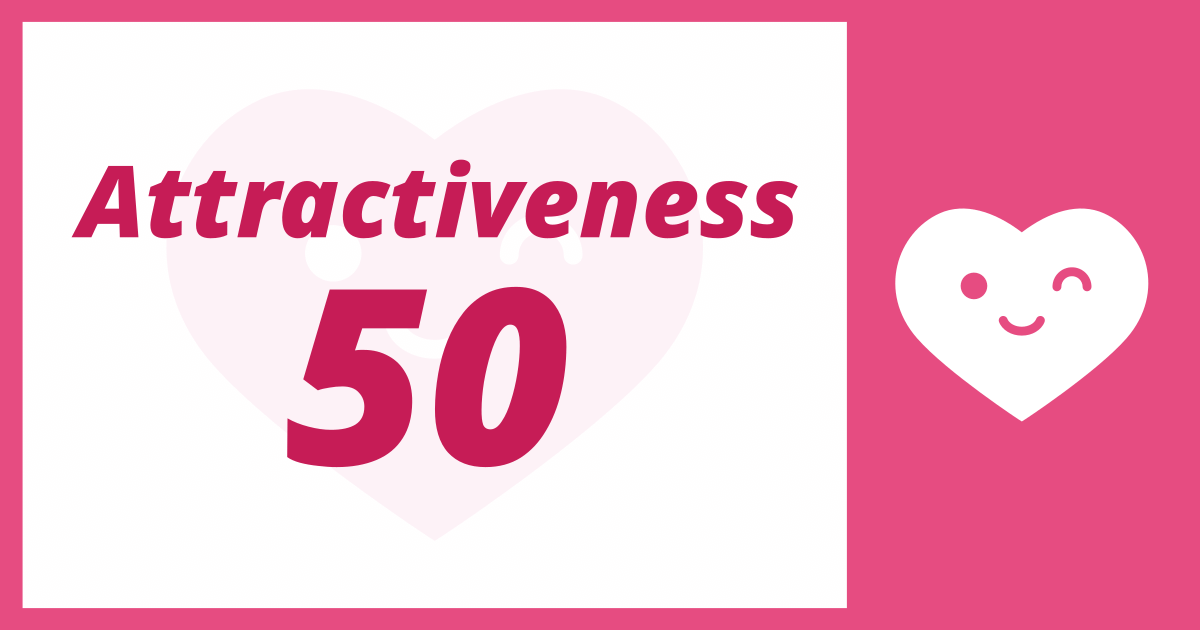
Read the full resultA result of 50 does not mean the top 50% or a 50% success rate. It is not a ranking against other people or a prediction of your romantic future.
The description explains the tendencies associated with your level. It does not provide separate scores for confidence, communication or appearance.
Being reserved or shy is not the same as being unlikable. Treat the result as a description of interaction patterns reflected in your current answers.
Answer with your everyday self in mind, rather than your ideal self.
Take the Test