Get to know your everyday temperament
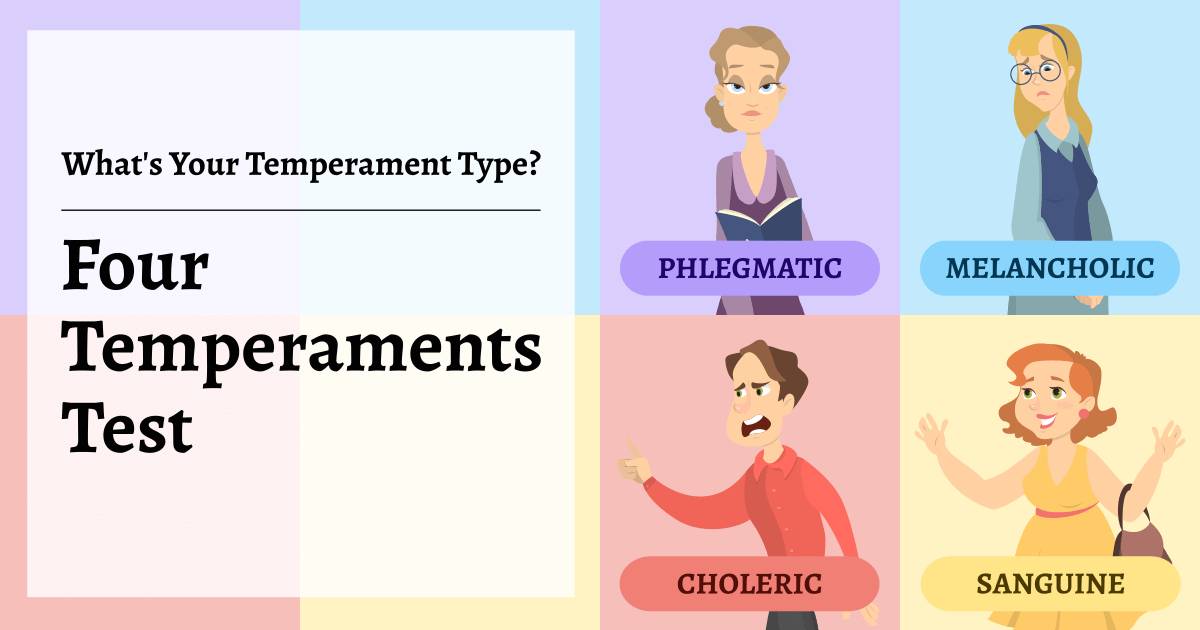
Some people feel energized by conversation; others prefer to reflect before acting. The Four Temperaments Test explores these everyday patterns through four traditional temperament types.
Reflect on your habits
Answer 40 questions in about 3 minutes. Think about your usual behavior, rather than your ideal self.
Explore four temperaments
Your answers help organize patterns in how you relate to people and approach everyday situations.
Discover your type
Read about your temperament, strengths, and weaknesses to reflect on what feels familiar.
What your result includes
- Temperament and traits
- Strengths and weaknesses
- Work preferences and challenges
- Romantic tendencies
01What are the four temperaments?
The four temperaments are a traditional way of describing differences between people. Their roots lie in ancient Greek medicine and the theory of the four humors. Building on the Hippocratic medical tradition, Galen linked bodily humors with temperament.
Blood, phlegm, black bile, and yellow bile were once thought to influence both body and mind. The names of the four temperaments come from this historical framework.
The humors behind the names
SanguineBlood
PhlegmaticPhlegm
MelancholicBlack bile
CholericYellow bile
This is a historical explanation. This test does not measure bodily fluids or health; it is a tool for reflecting on your behavior.
02Meet the four temperament types
Connecting with people, offering calm support, thinking deeply, and moving things forward are different strengths. These types describe tendencies, not a ranking of better and worse personalities.
Sanguine
Share the excitement
Expressive and sociable, this type enjoys new people and experiences. Their enthusiasm can bring energy to a conversation or a group.
- Strength
- Connecting people and ideas through sociability and flexibility.
- Watch out for
- Shifting interests can make detailed planning and follow-through harder.
Phlegmatic
Create calm and harmony
Patient and steady, this type values comfortable relationships. They tend to listen carefully, avoid conflict, and support others at a consistent pace.
- Strength
- Making room for different opinions through patience and listening.
- Watch out for
- Keeping the peace can mean putting off decisions or personal wishes.
Melancholic
Think deeply, refine carefully
Thoughtful and attentive to detail, this type likes to understand things thoroughly. They value planning, analysis, and a conscientious approach.
- Strength
- Using observation and preparation to produce careful work.
- Watch out for
- High standards can turn into worry or excessive self-criticism.
Choleric
Set a goal and take action
Decisive and driven, this type readily turns intentions into action. They speak directly and are often willing to take the lead when things get difficult.
- Strength
- Helping things move forward through initiative and decisive action.
- Watch out for
- A focus on results can lead to forceful words or overlooking someone else's pace.
03One situation, different priorities
Imagine planning a trip with friends
SanguineLet's find something everyone will enjoy.
PhlegmaticLet's hear what everyone would like to do.
MelancholicLet's research the options and plan the details.
CholericLet's choose a destination and make a booking.
These examples illustrate the differences. You may recognize more than one tendency in yourself, and your behavior can vary by situation.
04How to read your result
Treat your type as a starting point
Your result presents one temperament based on your answers. Not every description will fit. Consider when and where you recognize each pattern in your own life.
Read strengths alongside weaknesses
A quick decision can feel reassuring in one situation and rushed in another. Look for conditions where your tendencies help, rather than judging your whole personality.
Use work and love insights to start a conversation
Career and relationship descriptions are general tendencies associated with a type. They do not determine your ideal job or compatibility. Compare them with your experience and the other person's perspective.
Frequently asked questions
Does melancholic mean depression?
No. Melancholic is the name of a temperament in this framework, not a medical diagnosis. This test does not determine whether you have a mental health condition.
Can I relate to more than one temperament?
Yes. People have many sides and may act differently in different situations. This test presents one type, but other descriptions can also offer useful points for reflection.
Will my result always stay the same?
Your answers may change with your circumstances and how you see yourself. Use your result to reflect on your current patterns, rather than treating it as a permanent label.
References
This resource explains the history of humors and temperament. It is not a validation study of this test.